
Houston Homeowners Face These Common Residential Electrical Problems
Most homeowners don’t think about their electrical system until something goes wrong. Unlike a leaking pipe or a cracked foundation, electrical problems often develop silently behind walls, until they become a safety hazard or a costly emergency. Here’s a breakdown of the most common electrical issues A1 Plus Electrical sees in Houston homes, along with what to watch for.
Lost Service Legs Cause Partial Power Loss in Houston Homes
If electricity works in some rooms but not others, or your air conditioner runs but won’t cool the house, your home may have lost one “leg” of electrical service. Residential homes receive 240 volts split into two 120-volt legs. When one leg is severed or disconnected, half the home loses power while the other half appears completely normal, which makes the problem easy to misdiagnose. Our Houston electricians are standing by to help.
In Houston specifically, damaged underground service laterals are a leading cause of this problem. The region’s shifting clay soils put constant stress on buried cables. Even minor nicks from the original installation can corrode over decades and eventually sever the connection entirely.
Houston Homes Built Before 1972 Face Elevated Fire Risk from Aluminum Wiring
Homes built between the mid-1960s and early 1970s may contain aluminum branch circuit wiring. During that period, a copper shortage pushed builders toward aluminum as a cheaper alternative. Aluminum expands and contracts more aggressively than copper with temperature changes, leading to loose connections, oxidation, and arcing at outlets and switches over time.
The U.S. Consumer Product Safety Commission found that homes with pre-1972 aluminum wiring are 55 times more likely to have connections reach fire-hazard conditions than copper-wired homes.
Aluminum wiring produces three warning signs Houston homeowners should not ignore: flickering lights without an explainable cause, warm or discolored outlet and switch cover plates, and a fishy or urine-like odor near outlets, which signals overheating plastic insulation and requires immediate attention.
A full whole-home rewire isn’t always the only path forward. Alumiconn connectors splice copper pigtails onto aluminum wires at every connection point, significantly reducing fire risk at a fraction of the cost of full replacement.
Remediation Options:
| Method | Description | Cost Impact |
| Whole Home Rewire | Completely replacing all aluminum wire with copper. Requires opening walls and ceilings. | High ($20,000 – $50,000+) |
| Alumiconn / Pigtailing | Splicing copper “pigtails” to aluminum wires at every device using specialized connectors with antioxidant paste. | Moderate ($10,000 – $15,000) |
Loose Connections and Failed Grounding Systems Cause Ghost Electrical Problems
Random flickering lights, appliances that burn out prematurely, and electronics that behave erratically are symptoms of loose connections or a compromised grounding system. Without a proper path to ground, voltage fluctuations damage sensitive motors in dishwashers, pool pumps, and washing machines, leading homeowners to replace the appliance rather than fix the actual source.
Driving new copper ground rods and bonding them correctly to the panel stabilizes voltage, protects connected equipment, and eliminates the conditions that produce these unexplained failures.
Aging and Builder-Grade Panels Put Houston Homes at Risk
Residential electrical panels carry an industry-estimated lifespan of 25 to 40 years, but builder-grade panels installed in new construction frequently fall short of that range. Builders install standard-tier equipment to control costs, and many of these panels carry only a 10-year warranty.
Panel quality has measurable consequences. The Eaton BR series, common in builder-grade installs, uses an aluminum bus bar, while the Eaton CH series uses copper, which offers superior conductivity and a limited lifetime warranty. Under sustained load, that materials gap becomes a reliability gap.
Code requirements add additional pressure on older panels. The 2020 National Electrical Code requires an outdoor emergency disconnect on one- and two-family dwellings, giving first responders the ability to cut power from outside during a fire. The 2020 NEC also mandates Arc-Fault Circuit Interrupter (AFCI) protection, technology that detects dangerous arcing conditions standard breakers miss entirely. Many panels installed before these updates, and even some recent installs, don’t meet either requirement.
Modern Houston Homes Require Greater Electrical Capacity Than Older Panels Provide
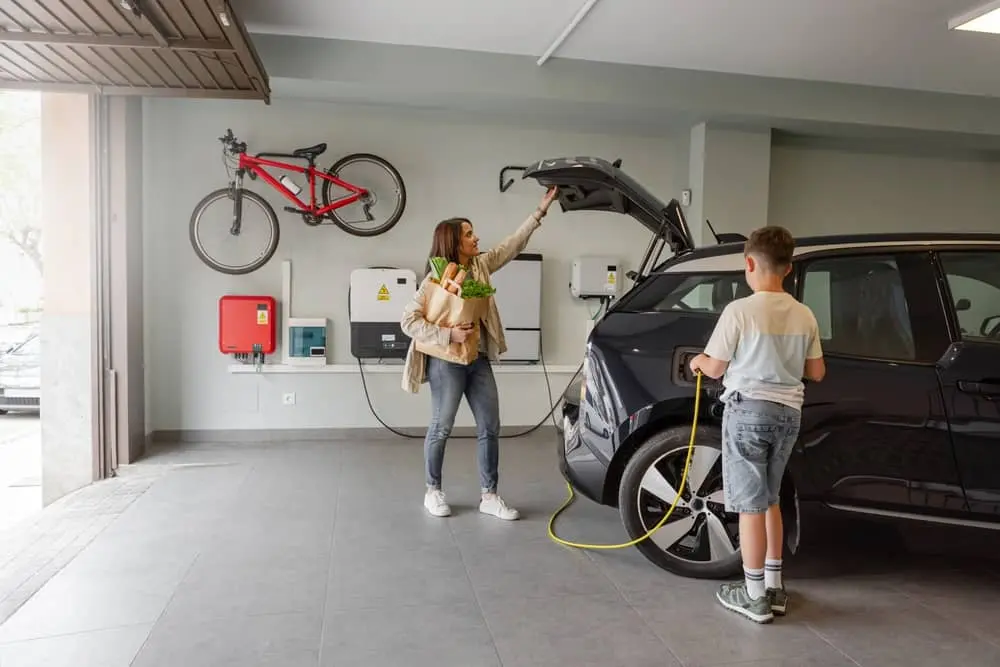
Houston homeowners are putting more demand on their electrical systems than ever before. Electric vehicle chargers, whole-home generators, upgraded HVAC systems, and added square footage all require dedicated circuits and careful load calculations. A panel that handled a home’s needs in 2005 may be genuinely undersized for that same home today.
If you’re planning any significant addition, an EV charger, a generator interlock kit, a kitchen remodel, or a panel assessment before the project starts prevents capacity problems from surfacing mid-installation.
A1 Plus Electrical Serves Houston Homeowners Experiencing These Warning Signs
Any of the following warrant a professional evaluation: partial power loss in any area of the home, breakers that trip repeatedly under normal loads, flickering lights or warm outlet covers, a fishy smell near any electrical device, a panel that is 25 or more years old, or any home built between 1965 and 1975.
Electrical problems rarely resolve on their own. Contact A1 Plus Electrical, Plumbing & Air. Our licensed electricians serve the Houston area and assess, diagnose, and resolve electrical problems before they become emergencies.