
Home » Electrical Services » Electric Car Charging
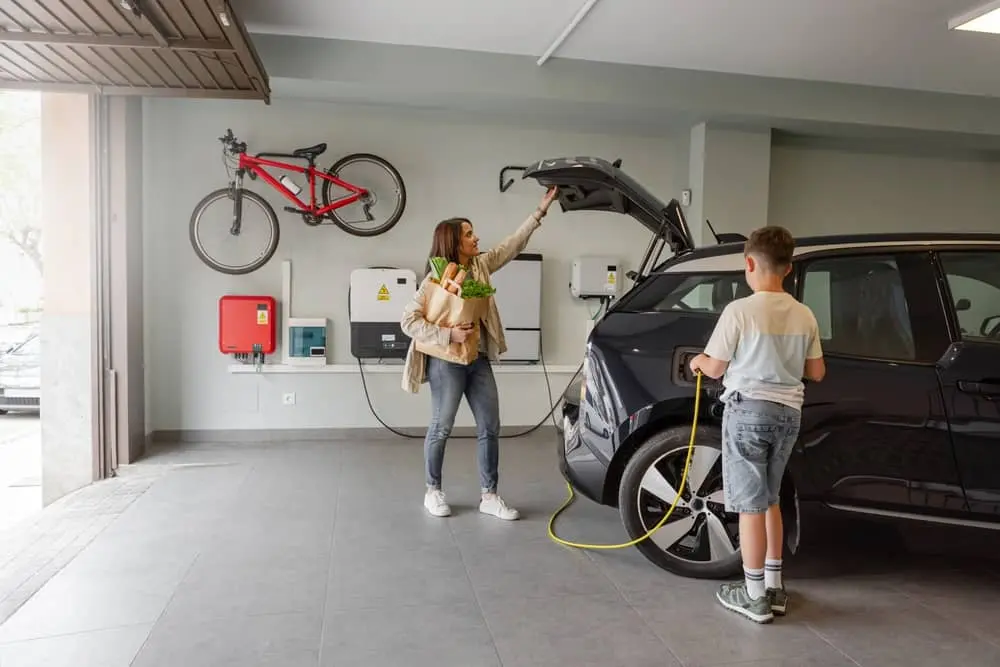
As electric vehicles (EVs) move from niche luxury items to mainstream transportation, the demand for reliable home charging solutions has skyrocketed. While plugging a car into a standard wall outlet works for some, most EV owners eventually require a dedicated Level 2 charger for faster, more efficient powering. However, installing these units is rarely a one-size-fits-all project. From the location of your breaker box to specific electrical code requirements, several variables dictate the complexity and cost of the job.
Understanding the nuances of EV charger installation can help homeowners budget effectively and ensure their electrical systems are safe and code-compliant.
Curious about what our Houston, TX, customers are saying? Check out our customer reviews and testimonials. Call us today for service, including after-hours and emergency services.
So you recently purchased an electric vehicle and need to be able to charge it. Congratulations!
Your electric vehicle will be a purchase you’ll love for many years to come. It will save you a lot of money over the long run. But due to your vehicle now being electric, you no longer need to fill up your tank. Now, charging up is something you need to do. You could do this at a supercharger, but installing an electric car charging station in your home is a much more convenient option. Contact the experts at A1 Plus Electrical, Plumbing and Air to help you pick out, install, or repair your electric car charging station today.
No matter the problem, our Houston electricians will determine what needs to be replaced before any work is done. So you know exactly what solution is best for your home electrical system.
Modern electrical codes, specifically the National Electrical Code (NEC), have strict safety requirements for EV chargers. The type of installation you choose, hardwired versus plug-in, impacts these requirements.
| Installation Type | Description | GFCI Breaker Requirement |
| Hardwired (Wall Connector) | The charger is wired directly into the electrical circuit without a plug. | Not Required: Hardwired units typically have built-in Ground Fault Circuit Interrupter (GFCI) protection |
| Receptacle (Plug-in) | The electrician installs a NEMA 14-50 outlet for the charger to plug into. | Required: NEC 2020 requires a GFCI breaker for 240-volt outlets in garages. |
Note on GFCI Costs: A GFCI breaker is significantly more expensive than a standard breaker. The part alone can cost between $150 and $200, compared to $10-$20 for a standard breaker.
The layout of a home plays a massive role in determining how difficult and expensive an EV charger installation will be. One of the primary variables is the location of the electrical panel relative to the garage or driveway.
Home electric vehicle (EV) charging stations come in three primary types, each offering different charging speeds and levels of installation complexity. Here’s a breakdown of the most common models:
Level 1 chargers use a standard 120-volt outlet and are the most basic option for home use. They offer slow charging speeds, typically adding 3-5 miles of range per hour. This option is best for drivers with low daily mileage or those with plug-in hybrids, as they can take 20 hours or more to fully charge your car.
Level 2 chargers use a 240-volt outlet and offer significantly faster charging than Level 1, adding about 25-30 miles of range per hour. Most fully electric vehicles can charge overnight in 4-8 hours. These chargers are ideal for households with higher mileage or multiple electric cars.
DC fast chargers are the most powerful option. They can add 60-100 miles of range in just 20 minutes, but require significant electrical upgrades. These chargers, however, are typically most suitable for commercial locations rather than residential settings.
Our professional EV home charging station installation process begins with a comprehensive assessment of your home’s electrical system to determine the best location and necessary upgrades for safe, efficient charging. Skilled electricians will evaluate your panel capacity and circuit requirements to guarantee seamless integration of the charging station without overloading your system.
Once the location is finalized, they carefully set up the charger, running dedicated wiring and grounding to support its high power demands. Precision and attention to detail help make certain that the EV charging installation not only adheres to local electrical codes but also optimizes charging efficiency. After installation, the team thoroughly tests the system, confirming the charger is fully operational and capable of delivering the power your electric vehicle needs.
Because installation difficulty varies so wildly, pricing is often presented in ranges rather than a flat fee. Homeowners should be aware of the difference between a “standard” install and a “custom” project.
A standard installation typically assumes the customer has already purchased the wall charger and the electrical panel has sufficient capacity and is located nearby. For these straightforward jobs, costs often range between $800 and $1,500. This covers the labor to mount the unit, install a standard breaker, and run a short distance of wiring.
When the installation requires running heavy-gauge wire from one corner of the property to another, potentially through attics or underground trenches, the price increases significantly. For these labor-intensive projects, costs can rise to $3,500 to $4,000.
Before installing a charger, an electrician must evaluate the home’s existing breaker box. Electrical panels generally have a lifespan of 25 to 40 years.[8] If a home is older, or if the panel is already full, it may not be able to support the additional load of an EV charger.
In these cases, a service upgrade or panel replacement is necessary. This involves replacing the entire breaker box and potentially the meter base to handle higher amperage. A full panel upgrade can add $1,500 to $4,000+ to the project cost, depending on the complexity and regional labor rates.
If you have an electric car, there are several reasons to consider installing an EV charging station on your property. Most notably, having an at-home EV charging station means never having to stress about finding a charging station before your car’s battery runs out. Other benefits include:
If you need an at-home EV charger for your electric car in Houston, look no further than the professionals at A1 Plus Electrical, Plumbing and Air. We can install EV chargers right in your garage or driveway so you can enjoy convenient, efficient charging anytime.
To keep your home EV charging station in perfect condition and prolong its lifespan, regular maintenance is a must. Regular visual inspections are a good starting point — check for any signs of wear, damage, or corrosion on the charging cable, connector, and station housing. Keep the station clean by wiping it down periodically with a dry cloth to remove dust and debris. If you notice any cracks, exposed wires, or loose components, refrain from using the station and contact a professional immediately, as they have the mastery and skill to tackle electrical issues safely.
It’s also important to protect your charging station from the elements; if it’s outdoors, consider installing a cover or canopy to shield it from rain, snow, and direct sunlight. For routine care, make sure the charging cable is properly coiled and stored when not in use to prevent tripping hazards and cable damage.
While these basic maintenance tasks can be handled by most homeowners, there are several situations where it’s best to call in a qualified electrician or EV charging specialist. These include:
We have a range of maintenance plans and financing options to choose from, so you can get the EV charging station tune-ups and repairs needed without breaking the bank.
A1 Plus Electrical, Plumbing, and Air is the trusted name in Houston you can count on when it comes to keeping your vehicles powered up. Contact us today to schedule your home EV charger installation and receive a cost estimate!
When you start looking into chargers, you’ll hear about three different “levels.” Think of it like this: a Level 1 charger is a garden hose, a Level 2 is a firefighter’s hose, and a Level 3 is a city fire hydrant. For your home, you want that powerful and efficient firefighter’s hose. For nearly every Houston homeowner, a Level 2 charger is the perfect solution.
That charging cord that came with your car? That’s a Level 1 charger. It plugs into any regular wall outlet, which is handy, but it’s incredibly slow. You might only get 3-5 miles of range for every hour it’s plugged in. It’s great to have in your trunk for an emergency, but relying on it every day can feel like trying to fill your car’s battery with an eyedropper.
Level 3 chargers are best suited for commercial use cases. This includes highway rest stops or public charging hubs, which often require rapid charging between destinations.
That’s a great question, and it’s one of the first things we look at. Your electrical panel is the heart of your home’s power system. Adding an EV charger is like asking that heart to support a new, power-hungry member of the family. We need to check two things: if there’s physical space for a new circuit breaker and if your system has enough power capacity to go around.
Some homes, especially newer ones, have panels with plenty of extra room and power. In that case, the installation is very straightforward. In other homes, the panel might be full or already close to its maximum load.
Don’t worry if your panel is maxed out. It doesn’t mean you can’t get a charger. It simply means we may need to explore options such as upgrading the panel or installing a load management system. When a technician from A1 Plus Electrical, Plumbing, and Air visits your home, we’ll provide a clear and honest assessment of your system’s capabilities and outline all your options.
You absolutely can, and most electric cars come with a cord that lets you do just that. That’s called Level 1 charging. It’s a handy thing to have for emergencies or if you’re visiting a friend’s house and need a little top-up.
But for your day-to-day charging, it’s just not a practical solution. The charging speed is so slow that you might not even be able to replace the miles you drove that day with an overnight charge. It can be a little frustrating to wake up and find your battery is still mostly empty.
There’s also a safety consideration. Standard home circuits aren’t really built to have something drawing a heavy amount of power, continuously, for 10, 15, or even 20 hours straight. A dedicated 240-volt circuit installed by a professional for a Level 2 charger is designed specifically for that job, giving you faster charging and a whole lot more peace of mind.
In most cases, yes. Adding a new 240-volt circuit is a significant electrical project, and the city of Houston and many of the surrounding communities require a permit to be pulled for the work. It leads to an inspection that confirms the installation was done correctly and meets all local electrical codes.
For a limited time only! Schedule your tune-up at the reduced price of $49!
Call for Conditions & Restrictions. Present Coupon at Time of Service. Not Available to Combine with Other Offers
Call for Conditions & Restrictions. Present Coupon at Time of Service. Not Available to Combine with Other Offers
Call for Conditions & Restrictions. Present Coupon at Time of Service. Not Available to Combine with Other Offers
Call for Conditions & Restrictions. Present Coupon at Time of Service. Not Available to Combine with Other Offers
Call for Conditions & Restrictions. Present Coupon at Time of Service. Not Available to Combine with Other Offers
Call for Conditions & Restrictions. Present Coupon at Time of Service. Not Available to Combine with Other Offers
Darlene A.
Addison P.
Louis D.
Ben D.
Arn N.
Chris P.
Lisa J.
Here at A1 Plus Electrical with the help of our top qualified electricians we have been providing top services to the greater Houston area for more than 10 years. We take pride in all the work we do and value our customers. We strive to be able to say we are Houston’s best electricians. We have a team of licensed and insured service electricians that can provide you electrical advice and solutions, contractive for new constructions, renovations, and upgrades. In addition, we also do exterior, interior, and LED lighting installations.