
Houston Homes Face Underground Wiring Damage and Aluminum Wiring Hazards That Develop Silently Over Time
When you flip a light switch or turn on your air conditioning, you expect immediate results. But for many Houston homeowners, partial power loss or an AC unit blowing warm air signals a problem hidden deep beneath the yard or behind the walls, often developing for years before becoming obvious. Two of the most common electrical issues are underground wiring damage and aluminum branch circuit wiring, both of which follow a predictable failure pattern that A1 Plus Electrical, Plumbing & Air sees regularly across the Houston area.
Houston’s Shifting Clay Soil Causes Underground Electrical Cable Failure
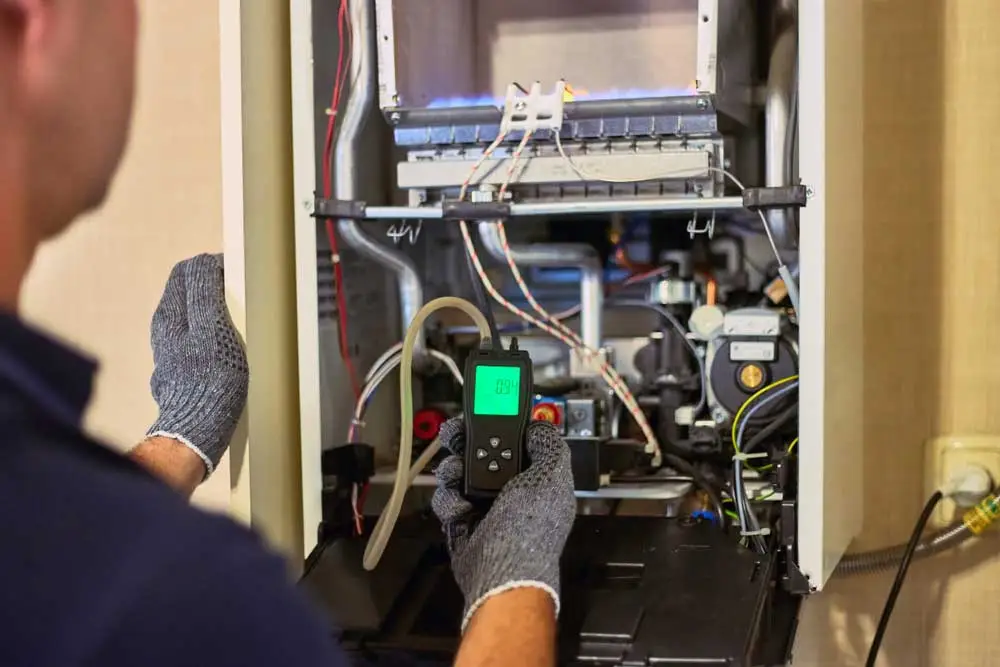
Underground wiring faces a fundamentally different set of threats than overhead lines. Wind and falling trees don’t reach it, but the earth itself does. Soil is not a static environment. It expands and contracts based on moisture levels and temperature, and during Houston’s recurring drought cycles, the ground dries out, cracks, and shifts significantly. That movement puts sustained physical stress on buried cables, stretching or severing them over time.
Soil composition compounds the problem. Clay-heavy soils, common throughout the Houston region, retain moisture that accelerates corrosion. In extreme heat, dry compacted soil acts as an insulator, trapping heat around underground cables and breaking down their insulation from the outside in.
Builder Installation Shortcuts Leave Houston Underground Wiring Vulnerable to Physical Damage
The longevity of an underground electrical service is often determined on the day it is installed. A widespread practice in residential construction, particularly in developments where builders prioritized cost control, is running direct burial cable without protective conduit. Direct burial cable is rated for underground use, but without a PVC or metal conduit surrounding it, the wire has no shield against rocks, shovels during backfill, or earth movement.
The failure from a small nick during installation is rarely immediate. Electricity traveling through an imperfect conductor degrades the insulation gradually, and what begins as a minor defect can grow over the years into a complete connection failure. Conduit eliminates this vulnerability by separating the conductors from direct contact with soil and physical impact entirely.
Aluminum Underground Service Lines Corrode and Fail Faster Than Copper Alternatives
The metal used in underground service lines has a direct impact on how long they last. Builders frequently chose aluminum for underground runs because it is lighter and substantially cheaper than copper. But aluminum is more brittle than copper and oxidizes when exposed to air or moisture. That oxidation creates resistance, resistance generates heat, and sustained heat at connection points produces the conditions for failure or fire. Copper, by contrast, resists corrosion, handles physical stress better, and remains the industry standard for durable electrical infrastructure.
Houston Homes Built in the 1980s and 1990s Enter the High-Risk Window for Underground Wiring Failure
Underground electrical cables carry a finite lifespan. Industry electricians consistently identify a failure window occurring between 20 and 30 years of service, which means homes built in the 1980s and 1990s are currently in or approaching that range. Over three decades, the compounding effects of moisture ingress, thermal cycling, and incremental ground movement degrade insulation to the point where moisture enters the cable and causes short circuits or total system failure.
Partial Power Loss in Houston Homes Signals Underground or Branch Circuit Wiring Failure
Underground wiring damage rarely causes a total blackout. Residential electrical service runs on two 120-volt legs that combine to deliver 240 volts to large appliances. When one underground wire fails, one leg goes down while the other remains functional, producing a specific set of symptoms homeowners often misdiagnose.
An air conditioner that runs but blows warm air is one of the most common indicators. The unit receives enough power to operate the fan but not the compressor, which requires full 240-volt service. Alongside that, half the home’s outlets or lights may go dead while the other half work normally, or voltage irregularities from a failing neutral wire cause lights to flicker or dim without an obvious explanation.
Mid-Century Houston Homes Contain Aluminum Branch Wiring That Creates Fire Hazard Conditions at Connection Points
For homeowners in properties built between the mid-1960s and mid-1970s, a separate but related danger exists inside the walls. A global copper shortage during that era drove builders to use single-strand aluminum wiring for residential branch circuits. The problem is not the cable itself, it is what happens at every point where that wire connects to an outlet, switch, or splice.
Aluminum expands and contracts with temperature changes at a significantly higher rate than copper. That repeated thermal movement causes wires to slowly work loose from screws and terminals over time. As gaps form, exposed aluminum oxidizes, and unlike copper oxide, which remains conductive, aluminum oxide acts as an insulator. The resulting resistance generates intense, sustained heat at connection points that can ignite surrounding materials. The U.S. Consumer Product Safety Commission found that homes with pre-1972 aluminum wiring are 55 times more likely to have connections reach fire hazard conditions than homes wired with copper.
Overheated Aluminum Wiring Produces Physical Warning Signs Houston Homeowners Should Not Ignore
The deterioration from aluminum wiring happens inside electrical boxes hidden in walls, and the symptoms are often subtle until the damage is advanced. A fishy or urine-like smell near an outlet or in a room signals that heat-resistant chemicals in plastic insulation and faceplates are breaking down, this odor is a critical warning that requires immediate professional attention. Flickering lights that cannot be fixed by replacing a bulb indicate a loose connection somewhere in the circuit. Switch plates or outlet covers that feel warm to the touch confirm dangerous resistance heating behind the wall. Outlets or circuits that work sporadically suggest a connection has physically separated or oxidized completely.
A1 Plus Electrical Offers Houston Homeowners Three Remediation Options for Aluminum Wiring
Addressing aluminum wiring does not always require opening walls to remove the old cables. A1 Plus Electrical approaches aluminum wiring remediation across three tiers depending on the condition of the system and the homeowner’s goals.
Copper pigtailing, often called the “fingertips” approach, treats the connection points where aluminum wiring creates the most risk. A short section of copper wire is spliced onto the end of each aluminum wire using CPSC-approved AlumiConn lug connectors, which physically separate the two metals to prevent galvanic corrosion and use a set screw to hold the connection permanently. The copper end then attaches to the outlet or switch, removing aluminum from direct contact with terminals. This method typically costs between $10,000 and $15,000, depending on home size.
Arc-Fault Circuit Interrupter breakers provide an additional layer of protection. Unlike standard breakers that respond only to overloads, AFCI breakers detect the electronic signature of dangerous arcing at loose connections before a fire starts. This does not fix the underlying connection problem, but it cuts power to a failing circuit before ignition occurs.
A whole-home rewire, complete removal and replacement of all aluminum branch circuit wiring with modern copper, is the most comprehensive solution. It requires opening walls and ceilings and represents a significant renovation investment ranging from $30,000 to over $50,000, but it eliminates the hazard.
A1 Plus Electrical Diagnoses and Repairs Underground Wiring and Aluminum Wiring Hazards Across Houston
Underground wiring failure and aluminum branch circuit deterioration share a common trait, both develop gradually, both produce symptoms homeowners frequently misattribute to other causes, and both carry serious safety consequences when left unaddressed. If your Houston home is showing signs of partial power loss, unexplained flickering, warm outlet covers, or unusual odors near electrical devices, contact A1 Plus Electrical, Plumbing & Air. Our licensed Houston electricians assess the condition of your wiring, identify the source of the problem, and provide the appropriate solution before minor degradation becomes a major hazard.