
Houston Homeowners With Aluminum Wiring Avoid Full Rewires Through Circuit Restore Service
For homeowners in properties built between the mid-1960s and late 1970s, a hidden electrical hazard may be present behind every wall: aluminum branch circuit wiring. During the Vietnam War era, a global copper shortage drove builders to use aluminum wiring in millions of homes. While aluminum conducts electricity, it behaves differently from copper in ways that create long-term fire risk at every connection point in the system. A1 Plus Electrical, Plumbing & Air addresses this hazard through a targeted remediation process called a Circuit Restore, a code-compliant solution that costs a fraction of a full rewire and requires no drywall demolition.
Give us a call today. Our Houston electricians are standing by.
Aluminum Wiring Creates Fire Hazard Conditions at Connection Points in Houston Homes
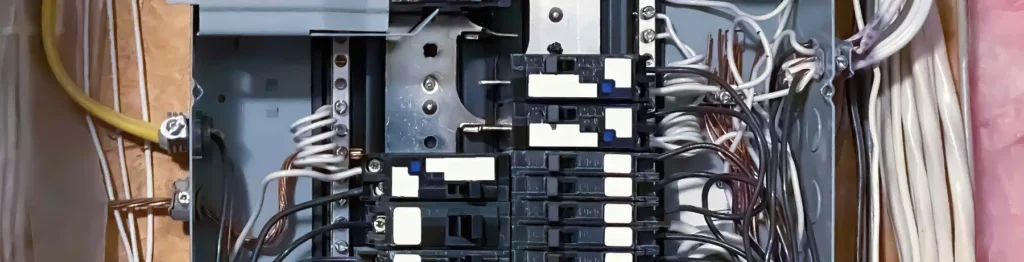
The danger from aluminum wiring is not the cable running through the walls, it is what happens where that cable meets an outlet, switch, or splice. Aluminum expands and contracts at a significantly higher rate than copper when heated and cooled. That repeated thermal movement causes wires to slowly work loose from terminals over time. As gaps form, aluminum oxidizes, and unlike copper oxide, which remains conductive, aluminum oxide acts as an insulator, creating resistance that generates intense heat at the connection point.
The U.S. Consumer Product Safety Commission found that homes with aluminum wiring are 55 times more likely to have fire hazard conditions at outlet connections than homes wired with copper.
Overheating Aluminum Connections Produce Four Warning Signs Houston Homeowners Recognize
The deterioration from failing aluminum connections happens inside electrical boxes hidden in walls, and symptoms are often subtle until the damage is advanced. Flickering lights that cannot be resolved by replacing a bulb indicate a loose connection somewhere in the circuit. Partial power loss, an entire room or chain of outlets going dead, occurs when a single failed connection disrupts everything downstream. Switch plates or outlet covers that feel warm to the touch confirm resistance heating behind the wall. A fishy or ammonia-like smell near any electrical device signals that heat-resistant chemical compounds in plastic insulation and faceplates are actively breaking down. This odor requires immediate professional attention.
A1 Plus Electricians Use the Chain Link Fence Analogy to Explain Partial Power Loss to Houston Customers
One of the most common triggers for a Circuit Restore call is partial power loss. A1 Plus Electrical uses the chain link fence analogy to explain the problem: if one link in the fence breaks, everything downstream loses tension. A single failed aluminum connection can cut power to every outlet, switch, and fixture on that circuit. By systematically treating every connection point, the fingertips of the electrical system, electricians restore reliability across the entire circuit without opening a single wall.
The Circuit Restore Process Targets Connection Points Where Aluminum Wiring Failure Originates
A Circuit Restore is a targeted remediation strategy that modifies the connections rather than replacing the cables. The process works in three stages.
Device replacement addresses old, loose receptacles and switches that have been physically damaged by years of thermal cycling. Connection treatment re-splices every wire end to ensure tight, arc-free contact going forward. The core of this stage is copper pigtailing, splicing a short section of copper wire onto the end of each aluminum wire using CPSC-approved AlumiConn lug connectors. These connectors physically separate the two metals to prevent galvanic corrosion, incorporate antioxidant paste to prevent oxidation at the junction, and use a set screw to hold the connection permanently. The copper end then attaches to the device, ensuring aluminum never makes direct contact with an outlet or switch terminal again.
The final stage installs Arc-Fault Circuit Interrupter breakers throughout the panel. First introduced in the National Electrical Code in 1999, AFCI breakers detect the electronic signature of dangerous arcing, the sparking that occurs at loose connections before a fire starts, and trip the circuit instantly. Standard breakers only respond to overloads. AFCI protection functions as a continuous safety net over the rehabilitated circuit, monitoring for conditions that standard equipment misses entirely. Homeowners should also be aware that the NEC updates every three years, and modern code now requires AFCI protection in most living areas of the home.
Circuit Restore Service Costs Houston Homeowners Significantly Less Than a Full Home Rewire
The economics of a Circuit Restore versus a full rewire are straightforward. A complete home rewire is a major construction project, cutting into drywall and ceilings, running new cable throughout the house, patching and repainting, with costs ranging from $20,000 to $50,000 or more for larger Houston homes. A Circuit Restore addresses the actual failure points of the system, the connections, not the cable, at a typical cost of $10,000 to $15,000, with no structural disruption to the home. For most homeowners with aluminum wiring, the Circuit Restore delivers the safety outcome of a rewire at roughly one-third the cost and without the renovation footprint.
A1 Plus Electrical Provides Circuit Restore Service to Houston Homeowners Entering the High-Risk Window for Electrical Failure
Electrical panels carry an industry-estimated lifespan of 25 to 40 years, and many Houston homes built in the 1970s, 1980s, and 1990s are currently entering or past that window. Aluminum wiring, aging panels, and outdated protection all compound in homes of this age. Ignoring the warning signs is a calculable risk, the CPSC data on aluminum wiring is unambiguous. Contact A1 Plus Electrical, Plumbing & Air to schedule a professional electrical inspection. Our licensed Houston electricians assess the condition of your wiring and connections, identify the presence of aluminum branch circuits, and recommend the appropriate remediation path before a minor hazard becomes a catastrophic one.